
Blog
/
Articles/Blog/
Evaluating a 10 MW Bitcoin Mining Site in December 2025: Immersion-Cooled Container Setup Guide
Evaluating a 10 MW Bitcoin Mining Site in December 2025: Immersion-Cooled Container Setup Guide
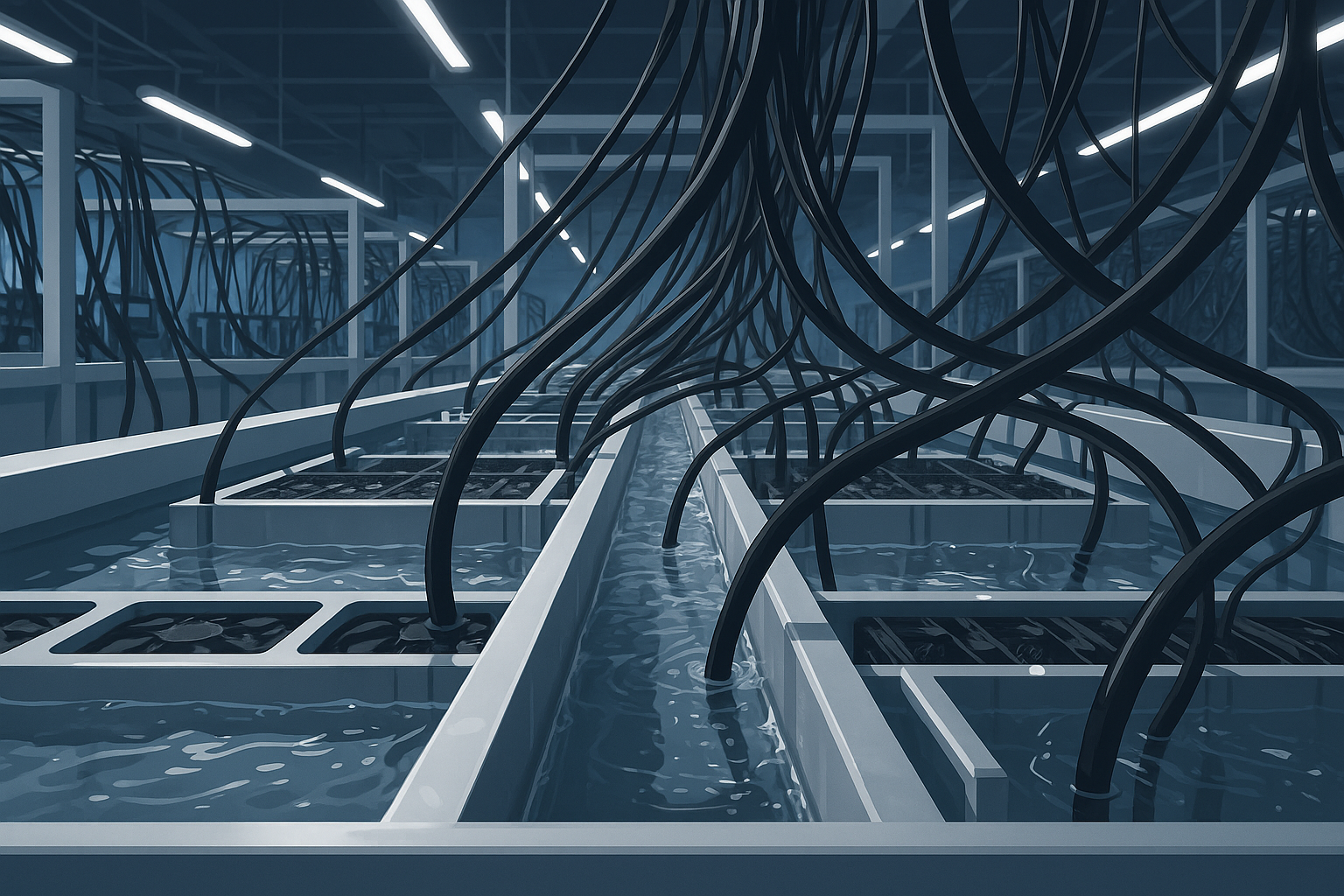
With post-halving rewards, rising network hashrate, and volatile Bitcoin prices, profitability in 2025 demands scale, efficiency, and low-cost power. This article provides a detailed, realistic analysis of a 10 MW immersion-cooled Bitcoin mining facility at $0.04/kWh—covering hardware selection, infrastructure, capital costs, operating expenses, regulatory considerations, and multi-scenario profitability outcomes to illustrate what it truly takes to compete today.
Bitcoin mining in mid-December 2025 remains highly competitive, with network hashrate around 800–1,200 EH/s (recent estimates varying from ~800 EH/s averages to peaks over 1,000 EH/s across sources like Hashrate Index, YCharts, and Minerstat), difficulty near 148–154 trillion, and hashprice in the low-to-mid $30s/PH/s/day amid BTC price volatility in the $80,000–$100,000 range. Post-2024 halving rewards are 3.125 BTC per block. Profitability demands low electricity costs (<$0.05/kWh), efficient hardware, and scale. Small-scale operations are generally disadvantaged due to higher relative power pricing, procurement challenges, and operational overheads—viability often requires an edge in power deals or efficiency. This guide details a realistic 10 MW (at the meter) immersion-cooled, container-based site at $0.04/kWh.
1. Planning and Feasibility Assessment
- Current Metrics: Track via Hashrate Index, CoinWarz—hashprice ~$35–$38/PH/s/day indicates tight margins.
- Scale: 10 MW is mid-scale; viable with strong power contracts.
- Key Assumptions: 95% uptime (net of typical operations, excluding major curtailment; each ±1% impacts annual revenue by ~±$100k at $100k BTC), 2% pool fee, block rewards only in base case (transaction fees provide upside).
2. Legal and Regulatory Compliance
Verify zoning, noise ordinances, environmental permits, and grid impact fees. Risks include community pushback, interconnect queues, and curtailment obligations. Examples include county noise moratoria in Texas, hydro allocation caps in Quebec, or extended protection-study timelines in PJM territories. Consult legal experts.
3. Site Selection and Infrastructure
Target locations with reliable low-cost power and grid capacity. Containerized immersion offers modularity and faster deployment.
4. Hardware Selection
Top immersion-compatible model: Bitmain Antminer S21 XP (air-cooled base, commonly adapted for immersion by removing fans).
- Specs: 270 TH/s, ~3,645 W, 13.5 J/TH efficiency.
- Immersion overhead: ~5% (pumps, CDUs, dry coolers).
- Net to miners: ~9.5 MW.
- Miner count: ~2,600 units.
- Facility hashrate: ~0.70 EH/s.
5. Cooling and Power Systems
Immersion eliminates fans, supports denser packing, and enhances reliability/uptime. Typical overhead 3–8%; advantages include lower failure rates and potential overclocking, though site-wide savings vary by design.
6. Software, Networking, and Operations
Use major pools (e.g., Foundry, Antpool). Implement optimized firmware, comprehensive monitoring, redundancy (pumps/CDUs), fluid maintenance protocols, and robust repair SOPs.
7. Costs Breakdown
For a 10 MW (at the meter) immersion container site at $0.04/kWh, initial capital expenses break down as follows: ASIC miners (approximately 2,600 units) range from $15 million to $20 million, based on ~$21–$25 per terahash—pricing that assumes bulk, direct-from-manufacturer or brokered purchases typical for mid-scale industrial deployments, as spot or retail pricing may be higher. The immersion system and containers cost $2 million to $8 million, while electrical infrastructure, site preparation, and interconnect work run $2 million to $10 million or more, depending on utility upgrades. Networking, security, and commissioning add $0.3 million to $1.5 million. Overall, total initial CAPEX (excluding land) falls in the $20 million to $40 million range.
On the ongoing annual side, coolant and maintenance for immersion run $50,000 to $250,000, while staffing, repairs, insurance, and other non-power OPEX typically land between $0.7 million and $3 million. Electricity at full load anchors at approximately $3.5 million per year, though potential demand charges or fees could increase this. Key gotchas include long-lead items like transformers, the need for a solid spares inventory, and any impacts from curtailment.
8. Profitability Scenarios
Under base assumptions—a 0.70 EH/s facility, 2% pool fee, and block rewards only (with BTC around $100,000)—profitability varies significantly with network hashrate sensitivity.
If the network hashrate is 1,000 EH/s, annual revenue reaches about $10.8 million, leaving roughly $7.3 million gross after ~$3.5 million in power costs. Estimated operating profit (after $0.7 million to $3 million in non-power OPEX) comes in at $4.3 million to $6.6 million, yielding a rough payback period of 4 to 8 years on $25 million to $35 million CAPEX.
At a 1,100 EH/s network hashrate, annual revenue drops to around $9.8 million, with ~$6.3 million gross after power. Operating profit ranges from $3.3 million to $5.6 million, extending payback to approximately 5 to 10 years.
If the network reaches 1,200 EH/s, revenue falls to about $9.0 million, gross after power to ~$5.5 million, and operating profit to $2.5 million to $4.8 million—pushing rough payback out to 6 to 14 years.
Note that upside potential exists from transaction fees, lower-than-assumed ASIC costs, or curtailment incentives, while downside risks include faster hashrate growth, downtime, or additional charges. Payback remains highly variable and requires detailed, customized scenario modeling.
9. Environmental Considerations
Bitcoin network consumes ~150–193 TWh annually (~0.5–0.8% global electricity), with emissions estimates varying by methodology (e.g., CBECI lower bound, Digiconomist higher). Sustainable share ~52% (renewables/nuclear). Immersion improves efficiency; pairing with renewables reduces impact. Estimates vary widely by methodology and should be interpreted directionally rather than precisely.
Final Thoughts
A 10 MW immersion site at $0.04/kWh is capital-intensive and high-risk, with potential payback of 4+ years under current conditions. Success requires expertise in power negotiation, operations, and risk mitigation. Alternatives like hosting lower entry barriers. Verify latest metrics and consult professionals—mining entails significant volatility.
Related Articles


FAQS
Frequently Asked Questions
-
Why was QuoteHost founded?

To provide a one stop solution to procure hardware, hosting, bitcoin mining sites and facility management.
How does QuoteHost charge?
We are an introducer to your solution and only take a fee from the provider. It's entirely free to you.
Will you help me choose an option?
Yes, we are willing to provide you with a free consultation to source the best solution for your needs.
How do you source your providers?
We have over a decade built rollodex of providers that have been procured specifically to benefit you.
Why are your prices so low/competitive?
We are able to negotiate the best prices on your behalf as a provider as we have strong relationships.
Latest Directories Listings
Discover companies involved in bitcoin mining from self-miners, hosting providers, hardware vendors and more
.svg)
CleanSpark
CleanSpark (NASDAQ: CLSK) is a Henderson, Nevada-based data center developer and Bitcoin mining leader (founded 1987) owning/operating U.S. facilities with competitive energy prices, focusing on compute power and shareholder returns.
Marathon Digital
MARA Holdings, Inc. (NASDAQ: MARA) is a Fort Lauderdale, Florida-based public company (founded 2013) focused on Bitcoin mining, digital energy infrastructure, and transforming excess energy into digital capital, with expertise in AI/edge computing efficiency.

